

by Tim Reckner
Date: July 15, 2026
Smell of Smoke and Hazy Skies: Canadian Wildfire Plume to Descend on Mid-Atlantic and Northeast
PHILADELPHIA — Residents across the Mid-Atlantic and Northeast are bracing for a noticeable drop in air quality as a thick plume of Canadian wildfire smoke makes its way down to the surface.
On Tuesday, the high-altitude smoke remained aloft, creating hazy but harmless conditions high in the sky. However, meteorologists warn that the situation is about to shift dramatically starting Wednesday evening.
Near-Surface Smoke Expected Wednesday Night into Thursday
According to the U.S. National Weather Service (NWS) Philadelphia/Mount Holly, a shift in weather patterns is bringing near-surface smoke directly into the region.
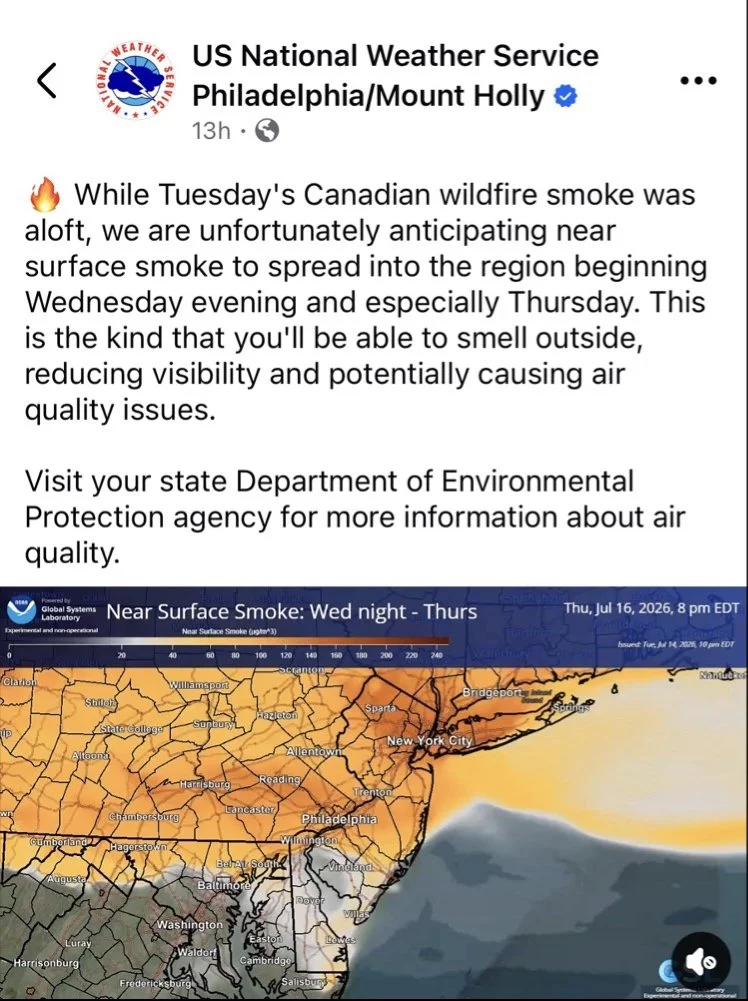
"We are unfortunately anticipating near surface smoke to spread into the region beginning Wednesday evening and especially Thursday. This is the kind that you'll be able to smell outside, reducing visibility and potentially causing air quality issues."
Unlike high-altitude haze, near-surface smoke poses direct health risks because the fine particulate matter (PM2.5) sits at ground level where people breathe.
Key Regions Affected
The NWS forecast models show the heaviest concentration of near-surface smoke blanketing a massive corridor of the East Coast by Thursday, July 16, 2026, at 8:00 PM EDT. Areas expected to experience the most significant impact include:
Pennsylvania: Philadelphia, Allentown, Reading, Harrisburg, Lancaster, and Sunbury.
New Jersey: Trenton, Newark, and northern portions of the state.
New York: New York City and Long Island.
Delaware & Maryland: Wilmington and northeastern Maryland.
What This Means for Your Day
The arrival of the smoke plume is expected to trigger several noticeable environmental changes:
A Distinct Odor: Unlike previous days where smoke was trapped miles above, residents will likely be able to smell wood burning while outdoors.
Reduced Visibility: Driving conditions and general visibility will be reduced as a thick, milky haze settles over roads and city skylines.
Temperature Suppression: The sheer density of the smoke plume may block out enough sunlight to slightly suppress daytime temperatures on Wednesday and Thursday.
Health Recommendations & Air Quality Tracking
Health officials advise sensitive groups—including children, the elderly, pregnant individuals, and those with pre-existing respiratory conditions like asthma or COPD—to limit prolonged outdoor activity.
The NWS recommends that residents monitor local air quality indexes (AQI) as conditions progress. For real-time updates and localized health advisories, visit your state’s Department of Environmental Protection agency website.